
artificial intelligence

AI Wrote the Speech. Now Make it Sound Like You.

Why would you write a speech with AI?  Yes, it saves time. It’s convenient. And it’s a remedy for writer’s block. Or is it? The audience can recognize content that sounds computer generated and once they sense that it’s not you, your credibility can be compromised.
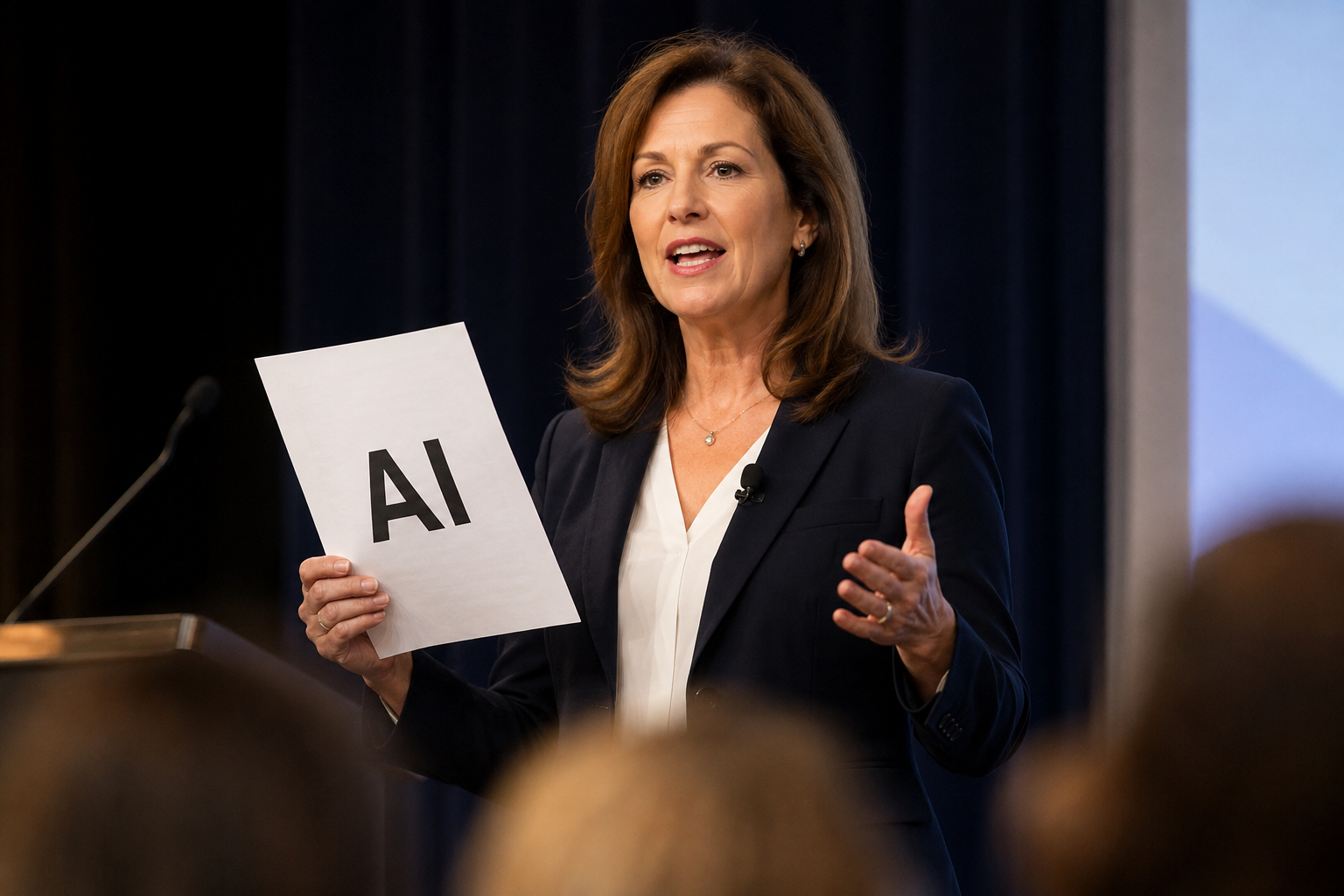
Content creator, Adrian Miller, Founder of Words Work Copywriting, works with entrepreneurs and companies to write their content. She’s noticed a trend recently. People are using AI to write their speech and then they call her to clean it up and make it sound like them. Not every speech writer can capture a speaker’s voice and AI certainly doesn’t do that well. AI generated speeches sound formal, generic. and lack personality.

But if you insist on writing a speech with AI here are some tips for making the speech sound like you.

1.       Don’t write a speech with AI. Try talking out your ideas into a recording device. Then edit the transcript.

2.       Give AI your topic and content for the speech and ask it to generate a list of bullet points.

3.       Choose the appropriate number and the best bullet points that work with your timing or word count.

4.       Ask AI to organize your chosen points into a logical sequence.

5.       Rewrite the points in your own language. Include the expressions you normally use. Ex. “You guys”

6.       Add your own personal stories, case studies, and experiences. This is a major distinction between AI-generated and human speech writing. Content created by AI cannot tell your story or speak in your voice. Speak your stories out loud so that they sound like you. Practice until you sound conversational.

7.       Provide specific personal details. “A year ago, when I first joined the company….” AI cannot drill down into your personal experience for every point or story. Being specific is an indicator of a human speech. As the saying goes, the devil is in the details.

8.       Use short sentences. AI tends to be formal. You want a speech that is written for the ear, not for the eye. Shorter sentences make you sound conversational.

9.       Insert strategic pauses. AI may string a number of sentences together. A human approach is to stop and pause. This allows the audience to process the message and for your point to land.

10.  Don’t aim for perfection. That’s what makes it sound artificial. It’s okay to use contractions or occasional slang if that’s how you speak.  When I was first starting out. I auditioned as a subcontractor for a training company. We all had to audition by delivering 5 minutes of the training material. Being confident in my platform skills I approached the front of the room. I delivered point 1, point 2 and then………..Dead silence. I forgot point 3. After a long pause, I remembered the point and sat down. Afterwards, one woman in the audience approached me and said, “I’m glad that happened. Otherwise, you would have been too perfect.” That was an eye-opener for me. Reject AI perfection and aim for human imperfection. The audience wants to know you’re real.

Finally, once you have your written speech, practice good delivery skills by varying your intonation and pace. Familiarize, don’t memorize. If you must write the speech with AI here’s how to leverage AI without sacrificing your voice:

Follow these steps:

  • Create the speech with AI. 

  • Personalize it. 

  • Internalize it.

  • Connect with the Audience.

And that’s how to write a speech with AI and make it sound like you.

Connect with me on LinkedIn

Subscribe to my youtube channel

To work with me visit diresta.com

Read Knockout Presentations

The Fusion of Public Speaking and AI: Redefining Communication

In today's technologically driven world, artificial intelligence (AI) is being integrated into many aspects of life including public speaking.. From chatbots to driverless vehicles, AI's influence is reshaping industries and changing the way we interact with technology. And AI is making an important impact in the area of public speaking, transforming the way speeches are crafted, delivered, and received.

AI-Powered Speech Analytics

One of the most important AI  public speaking applications is speech analysis. Algorithms can evaluate speeches and presentations with impressive accuracy, providing feedback on  vocal  tone, pacing, and language usage.  Toastmasters International, some corporations, and of course speech coaches, have started using AI tools to enhance personalized feedback to presenters enabling them to fine tune their communication skills.

Beyond assessment, AI offers practical recommendations for improvement. For example,  AI can suggest adjustments to body language or vocabulary to increase clarity and impact. This real-time feedback allows speakers to see their video while being coached on a virtual platform instead of waiting to the file to be sent after a coaching session.  This simulates an in person coaching session whereby the coach films the client and shows the video immediately upon finishing the presentation. These AI public speaking tools are good practice tools for  reinforcement between learning sessions.

Content Generation and the End of Writer’s Block

Imagine no longer staring at a blank sheet of paper or a screen. In addition to analyzing speeches, AI is able to generate and curate content for speeches and presentations.. The Natural language processing (NLP) algorithms can quickly scrape the internet for a voluminous amount of data in seconds. With the proper prompts, AI can  identify relevant information, statistics, and anecdotes that can enhance a speech. AI  content generation tools can help speakers in crafting compelling stories by suggesting structure, key points, transitions and captivating titles. One cautionary note: Don’t assume that all content is copyright free. Edit the content in your own voice and insert personal examples.

This fusion of AI and public speaking shortens the speechwriting process and researches   credible and up-to-date information to back-up the message points.  Another benefit of AI is it can tailor content to specific audiences making sure the message resonates and is relevant to the particular group.   

Virtual Presenters and Audience Engagement

The increase in virtual communication platforms has given rise to  the integration of AI into public speaking. Holograms, natural language generation (NLG), and VR (virtual reality) create immersive environments. Virtual presenters can flex their delivery based on audience feedback. Given the insights they receive from AI, presenters can create deeper connections with the audience whether in person or virtual.


The Future of Public Speaking

The fusion of public speaking and AI is a paradigm shift in communication, offering  opportunities for speakers to hone their skills and connect with audiences on a deeper level. With continuing innovation,  AI will become an indispensable tool for speakers in all industries.

And while AI can enhance the efficiency and effectiveness of public speaking, it’s not a substitute for human interaction. It’s tempting to get caught up on the technology. But impactful communication requires authenticity, empathy, and real connection.  The best presenters will balance AI insights with human intuition and creativity to deliver compelling presentations. Remember: You are the brand.