
 This morning as I was watching Morning Joe on TV, a clip was played of Sarah Palin. http://www.msnbc.msn.com/id/3036789/#39684087
The discussion was facilitated by Mike Barnicle who asked that the clip be played again, but this time we should listen to the tone. After listening for a second time, Barnicle asked the group, "Do you want to listen to that for four years?" While I agree that Palin sounded a little shrill and high pitched, that was not the issue. The issue was the way the question was asked. Barnicle's question was judgmental. Let's ask it a different way. "What do you think of her voice? Do you think she loses credibility? How will that impact her on the campaign trail?"
This is a different kind of question and a valid one at that. The voice is 38% of the message according to a UCLA study. The meta message is in the tone and not the words. Hillary Clinton lost credibility when she gave vent to her anger and passion in the form of an escalating tone. She has since found her voice. Men have an advantage over women in the vocal arena. A deeper or lower pitched voice will be perceived as more authoritative. While using the upper range of her pitch level doesn't serve a woman candidate, it seems that there's a double standard when it comes to men.
Former Mayor Koch of New York City has a nasal sounding voice and uses /um/ after almost every other word. This is how he spoke during his administration and he still uses this speaking style. Yet, we didn't hear comments such as "Could you listen to him for another four years?"
The points made during the discussion regarding tone were valid. What some people don't get is that there is a tone to language. And I heard an element of sexism in Barnicle's comment. What do you think?


 The other day I was on my way to Hilton Head South Carolina.
I boarded the airline which was on time. I sat back in my seat awaiting the usual safety drill. The attendant ended the announcement with "This is a no smoking no complaining flight. If you complain you'll be the entertainment - outside gone with the wind."
The other day I was on my way to Hilton Head South Carolina.
I boarded the airline which was on time. I sat back in my seat awaiting the usual safety drill. The attendant ended the announcement with "This is a no smoking no complaining flight. If you complain you'll be the entertainment - outside gone with the wind."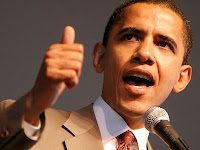 There was a popular song years ago that went " Who let the dogs out?" And that's a question that's apropos this week in the media. The answer is President Obama let the dogs out in his recent speech in Milwaukee. Alluding to his opponents he said, 'They're talking about me like a dog." What does this tell us? Language reflects thought. While some studies state that words are only 7 per cent of the message, words are powerful. They give us insight into what the speaker believes and feels. In this case, Obama is saying he feels like a victim. The key is the wording "They're talking about ME". It's something that is happening to him. It's not the language of leadership. There is a difference between being genuine and appearing weak.
Former Mayor Giuliani showed genuine sadness during the bombing of the World Trade Center but he never spoke like a victim.
There was a popular song years ago that went " Who let the dogs out?" And that's a question that's apropos this week in the media. The answer is President Obama let the dogs out in his recent speech in Milwaukee. Alluding to his opponents he said, 'They're talking about me like a dog." What does this tell us? Language reflects thought. While some studies state that words are only 7 per cent of the message, words are powerful. They give us insight into what the speaker believes and feels. In this case, Obama is saying he feels like a victim. The key is the wording "They're talking about ME". It's something that is happening to him. It's not the language of leadership. There is a difference between being genuine and appearing weak.
Former Mayor Giuliani showed genuine sadness during the bombing of the World Trade Center but he never spoke like a victim.

 For years I've talked about the power of three's. I advise my clients to present 3 agenda items, 3 main points, and 3 benefits. People remember things in three's.

