
 A reader sent me an email today:
Dear Diane,
I will be representing SCORE on a small business management segment online later this week. I know the subject matter well. I just need your suggestions and tips as being interviewed on video is new territory for me.
****************************************************************************************************************************************************************
Video marketing is a powerful medium. When you're invited as an expert will you be ready? Here are some media training tips for when you present on video:
Look at the host who is interviewing you. If it’s a webcam feed, then look directly into the camera. With built in webcams, you may have to look up in order to be eye-to-eye with the viewers. That means you won’t see your notes on the screen too easily.
Begin with a hook to grab their attention-a statistic, a statement. Ex. "Host, Did you know that 80% of small businesses fail when using ecommerce?"
Build in a quick success. Ex." One client increased his online revenues when he learned to do this one thing…"
Speak in soundbites. This is critical. Write down 3-6 main messages. Each point should be one sentence, one thought. Say it crisply and then give an example. There’s no time for long storytelling in a media interview.
Video segments must move quickly.
Keep your language simple. Aim for 8th grade language. Avoid using too many technical terms. Use simple analogies. Ex. "Not having an ecommerce site is like not having a phone".
Talk from the audience view point. Don’t assume they know what you’re talking about. Provide value. What do they care about? Talk to those issues. Don’t be too detailed or they will tune out.
Be passionate. Video is an energy drain. That means you’ll seem more enthusiastic live than on the screen. So push your energy-especially in your vocal tone. Emphasize key words.
Be yourself. Sound like you’re having a conversation. Don’t talk at the audience; converse with them.
Don’t over gesticulate. Fast movements may not televise well.
Smile. You need to look friendly and inviting.
Imagine the audience. If you’re talking into a webcam you won’t be able to see reactions so get a picture in your mind of people responding to you.
Keep your head still. Your head should be straight on your neck with little or no tilting.
Sit or stand up straight. Slouching will send a negative message.
Know what is behind you as background. Are you in someone’s studio? Ask about the backdrop color. You don’t want to wear black if the background is black.
Check your appearance in a mirror right before the interview. Check for dandruff, a crooked tie, fly away hair, or shine. Use some dusting powder to avoid shine on the face or bald spots. Use hair spray and take it with you. Hair that stands up is distracting.
Don’t wear loud prints or large check patterns. They don’t televise well.
PAUSE between thoughts. This will eliminate /ums/ and allow time for the message to land.
End with food for thought or an action step. Ex. "Businesses are leaving money on the table when it comes to ecommerce. Go to www._________for a free assessment."
Remember it’s not about you-it’s about them (the audience).
Media training is no longer for authors and celebrities. Whether you're interviewing for a job, speaking as a guest expert online, or even sending a video email to your friends, all public speakers will eventually use the powerful medium of video presentations.


 Marketers, Take Note: Passion Sells
 Jeannette Paladino, author of the blog,



 The other day I was on my way to Hilton Head South Carolina.
I boarded the airline which was on time. I sat back in my seat awaiting the usual safety drill. The attendant ended the announcement with "This is a no smoking no complaining flight. If you complain you'll be the entertainment - outside gone with the wind."
The other day I was on my way to Hilton Head South Carolina.
I boarded the airline which was on time. I sat back in my seat awaiting the usual safety drill. The attendant ended the announcement with "This is a no smoking no complaining flight. If you complain you'll be the entertainment - outside gone with the wind."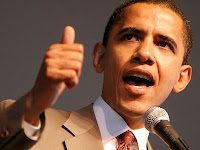 There was a popular song years ago that went " Who let the dogs out?" And that's a question that's apropos this week in the media. The answer is President Obama let the dogs out in his recent speech in Milwaukee. Alluding to his opponents he said, 'They're talking about me like a dog." What does this tell us? Language reflects thought. While some studies state that words are only 7 per cent of the message, words are powerful. They give us insight into what the speaker believes and feels. In this case, Obama is saying he feels like a victim. The key is the wording "They're talking about ME". It's something that is happening to him. It's not the language of leadership. There is a difference between being genuine and appearing weak.
Former Mayor Giuliani showed genuine sadness during the bombing of the World Trade Center but he never spoke like a victim.
There was a popular song years ago that went " Who let the dogs out?" And that's a question that's apropos this week in the media. The answer is President Obama let the dogs out in his recent speech in Milwaukee. Alluding to his opponents he said, 'They're talking about me like a dog." What does this tell us? Language reflects thought. While some studies state that words are only 7 per cent of the message, words are powerful. They give us insight into what the speaker believes and feels. In this case, Obama is saying he feels like a victim. The key is the wording "They're talking about ME". It's something that is happening to him. It's not the language of leadership. There is a difference between being genuine and appearing weak.
Former Mayor Giuliani showed genuine sadness during the bombing of the World Trade Center but he never spoke like a victim.

 For years I've talked about the power of three's. I advise my clients to present 3 agenda items, 3 main points, and 3 benefits. People remember things in three's.