
 When you think about difficult audiences, do you envision an audience in an auditorium with you speaking on the stage? Well, you don't have to be a formal public speaker to encounter a difficult audience.
Your audience includes your co-workers, employees, management and vendors. When you're dealing with so many different personalities it's inevitable that there will be conflict. Here's where trained public speakers have an advantage - the skills that are used to handle a difficult audience also apply when you're communicating one-on-one.
But what if you can prevent conflicts in the workplace? That's even better. Nobody has a 100% conflict-free life, but many conflicts can be averted when you understand yourself and others.
The unexamined life isn't worth living." -Socrates
The first step in managing a difficult person or situation is to understand how you're wired. What is your natural behavioral style? This is the way you communicate easily without much conscious effort. It's like being right handed. You don't think about it. When you meet a person or audience who has the same behavioral style as you, communication happens more easily.
But what happens when you encounter people who are your opposite? This is when an audience may be perceived as difficult. It would be great to have a tool that would help you recognize different behavioral styles so you know how to communicate effectively.
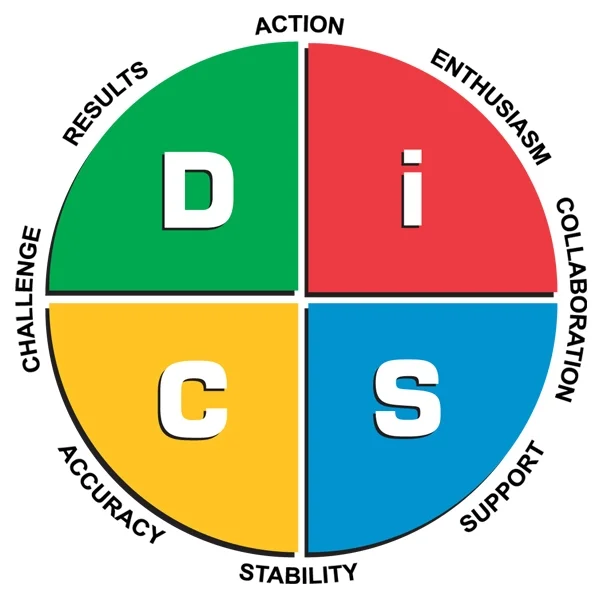
The DiSC Behavioral Profile can help you do that quickly and simply. The DiSC Behavioral Profile identifies your natural communication style, shows you how to recognize different styles, and gives you the tools for managing those differences.
In other words, you'll learn to speak their language and have greater influence, better communication, more understanding, and less stress.
Most often, conflicts happen because of differences in style; you're talking apples, they're talking oranges.
This can happen when you're giving a presentation to a group. For example, too often, technical people give too much detail to senior management. Or, a sales presentation lacks the level of data and evidence preferred by a scientific audience.
By knowing how others are wired, you can predict the commonalities you'll share, you'll be able to predict the conflicts that may arise, and you'll have a strategy to compromise.
Wow... Just signed on to take the DISC program with Diane and she helped me learn how to communicate with style!! Diane was simply amazing and her suggestions were 'spot on'. No one should miss this opportunity!"
-A. Weidberg
Don't know which style you are? Want to know more about DiSC? Contact us and ask for a free sample report.

 I read an interesting story written by
 Vernice Armour
 I recently read an article by Dylan Kendall entitled, "
 "Ask any businessman or woman and they will tell you the same thing – confidence is a vital ingredient in the recipe for success. In other words, if you want to be really good at anything - no matter what walk of life you are involved in - you need to have belief in yourself and your abilities."
 Professional speakers who are satisfied with the status quo will surely find their audience slipping away. Just like the car replaced the horse and buggy, dynamic, interactive presentations are replacing the talking head. Today, public speakers have to play a bigger game in order to give a




 Words are dying.
 TED.com
 When I first started out in my speaking business, I was hired by American Management Association to give public seminars in public speaking and presentation skills.
One day, the program director sent around a memo stating that all AMA presenters were expected to arrive early to the class. It was not acceptable to show up at 9:00 a.m. What? Who would do that? I always arrived an hour early.

 Josephine "Jody" Prestovino single-handedly brought missing federal supplies to Staten Island, New York by using her voice. Jody lost her home during hurricane Sandy and spoke on behalf of her own community with no media training. She looked directly at the camera and said, "Obama promised to cut through the red tape, but we've seen nothing. Nobody is here."
It's because she spoke with conviction and passion that she had an impact.
 TED
 The first presidential debate on October 3, 2012 belongs to Mitt Romney. It was a clear win in terms of content and delivery. Both candidates began cordially and gracefully. The President acknowledged his wife on the evening of their 20th anniversary. Mitt Romney also congratulated him and quipped about how Obama probably didn't want to spend a romantic evening on stage with him.
Both candidates are skilled public speakers. They each looked presidential but Romney owned the room with his rapid fire responses, his knowledge of the facts, and his aggressive approach. He seemed more relaxed and natural and was finally able to humanize his image by talking about people he had met on the campaign trail and correcting any inaccuracies about his policies. What was especially effective was his ability to speak crisply as he quickly enumerated three to four points he wanted to make. He made direct eye contact with Obama and his passion was evident. Gone was his robotic delivery.
 On Friday, Ford Saeks spoke to the