
 I'm about to hit a triple header with this blog post. Hopefully, this will be my last post about airlines.
On the first leg of my journey from Newark airport to Hilton Head, South Carolina, the pilot announced that we would be arriving late. Knowing I had a tight connection in Charlotte I was concerned that I could miss my next flight. It would board in thirty minutes and the plane I was on was a one hour flight.
I'm about to hit a triple header with this blog post. Hopefully, this will be my last post about airlines.
On the first leg of my journey from Newark airport to Hilton Head, South Carolina, the pilot announced that we would be arriving late. Knowing I had a tight connection in Charlotte I was concerned that I could miss my next flight. It would board in thirty minutes and the plane I was on was a one hour flight.
I approached the flight attendant in the back. I showed her my ticket and made a request. "Would you announce that the connecting passengers will deplane first?"
She looked at my ticket and said, "It doesn't leave for an hour. You'll be fine."
"But the pilot said we'd be late," I countered. I had heard other airlines make this kind of announcement in the past.
"Oh they wouldn't listen, " she volleyed back. I persisted and finally she admitted that they were not authorized to make the announcement. "That would have to come from the lead attendant. We could ask her but that doesn't mean she would do it."
To make a long story short, they didn't make the announcement. I doubt that she approached the lead attendant. The good news is once we were in the air, the pilot announced that we would be arriving early. Even so, I now had a negative impression of these flight attendants and the airline. They couldn't be bothered with my needs even though I was a customer.
Whether you speak to one or one thousand, your audience is your customer. What kind of message are you sending them? When they ask a question, you don't say "I don't know." You say, "I don't know. Let me get back to you." When your audience is physically uncomfortable, you take a moment and adjust the thermostat. If you're talking to scientists you don't give your typical sales pitch. You provide them with the data and studies they value and respect. When you sense the audience is bored, you don't keep yammering on. You check in, ask questions, start a discussion or take a break. If a layoff was just announced before your presentation, you don't do your happy dance. You acknowledge the elephant in the room, let them vent for a few minutes and then begin your talk.
As presenters, we are all in the business of serving customers. We set the tone. When you come from a place of service you communicate that you care. Take care of your audience and they will take care of you.

 The other day I was on my way to Hilton Head South Carolina.
I boarded the airline which was on time. I sat back in my seat awaiting the usual safety drill. The attendant ended the announcement with "This is a no smoking no complaining flight. If you complain you'll be the entertainment - outside gone with the wind."
The other day I was on my way to Hilton Head South Carolina.
I boarded the airline which was on time. I sat back in my seat awaiting the usual safety drill. The attendant ended the announcement with "This is a no smoking no complaining flight. If you complain you'll be the entertainment - outside gone with the wind."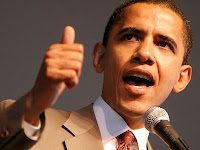 There was a popular song years ago that went " Who let the dogs out?" And that's a question that's apropos this week in the media. The answer is President Obama let the dogs out in his recent speech in Milwaukee. Alluding to his opponents he said, 'They're talking about me like a dog." What does this tell us? Language reflects thought. While some studies state that words are only 7 per cent of the message, words are powerful. They give us insight into what the speaker believes and feels. In this case, Obama is saying he feels like a victim. The key is the wording "They're talking about ME". It's something that is happening to him. It's not the language of leadership. There is a difference between being genuine and appearing weak.
Former Mayor Giuliani showed genuine sadness during the bombing of the World Trade Center but he never spoke like a victim.
There was a popular song years ago that went " Who let the dogs out?" And that's a question that's apropos this week in the media. The answer is President Obama let the dogs out in his recent speech in Milwaukee. Alluding to his opponents he said, 'They're talking about me like a dog." What does this tell us? Language reflects thought. While some studies state that words are only 7 per cent of the message, words are powerful. They give us insight into what the speaker believes and feels. In this case, Obama is saying he feels like a victim. The key is the wording "They're talking about ME". It's something that is happening to him. It's not the language of leadership. There is a difference between being genuine and appearing weak.
Former Mayor Giuliani showed genuine sadness during the bombing of the World Trade Center but he never spoke like a victim.

 For years I've talked about the power of three's. I advise my clients to present 3 agenda items, 3 main points, and 3 benefits. People remember things in three's.

