
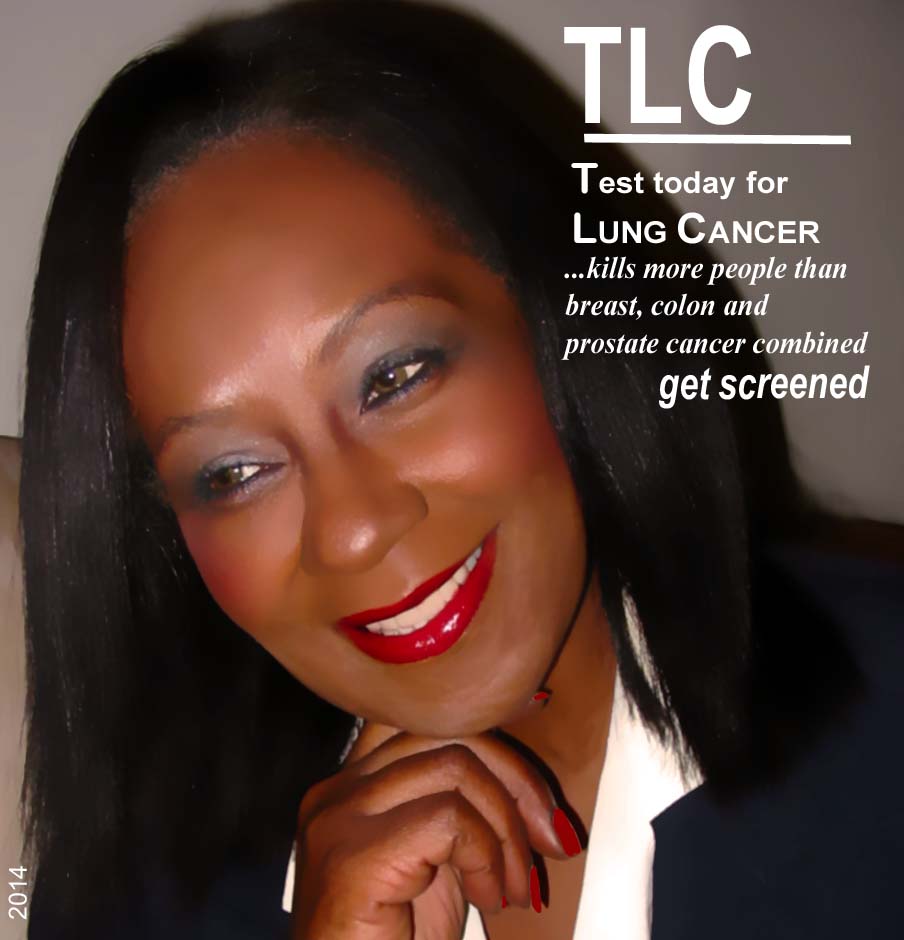
 What do you do when a loved one dies and you're the person to give the eulogy? Last weekend I attended the memorial service of my friend, Linda who lost her battle to lung cancer at the age of 63.
Memorial services are usually bittersweet. The service was beautifully inspiring and sad at the same time. The tributes from her sorority sisters gave an insight into her personality and the reader of her legacy left a powerful impression of Linda's contribution of the world. The soloist sang Linda's favorite song with feeling and his voice filled up the room with love.
What do you do when a loved one dies and you're the person to give the eulogy? Last weekend I attended the memorial service of my friend, Linda who lost her battle to lung cancer at the age of 63.
Memorial services are usually bittersweet. The service was beautifully inspiring and sad at the same time. The tributes from her sorority sisters gave an insight into her personality and the reader of her legacy left a powerful impression of Linda's contribution of the world. The soloist sang Linda's favorite song with feeling and his voice filled up the room with love.
The preacher read a passage from the Bible and eloquently spoke about Job, He told us that we had not lost anything. That Linda had been given to us as a gift and we shared that gift for 63 years. His sermon and his delivery were inspiring, uplifting, and impassioned.
While the preacher was a trained public speaker, the day may come when you are tapped to give the eulogy. You don't have to be experienced in public speaking to be effective. Here are six tips to remember when memorializing a loved one's life:
Develop a Time Line. If you don;t know where to begin, draw a horizontal line on your paper and mark down significant events or memories. It can be in 5 or 10 year intervals or any time frame that works.
Discover a Theme. Once you look at the timeline, you may see trends or stories that can be folded into a them. Ex. You always did it your way. You always went the extra mile.
Sequence your Ideas.Next, organize the most important and meaningful events and stories in a sequence that flows and is easy to follow. Don't give a biography of the person's entire life. Keep it brief.
Keep it Positive. Don't dwell on the failings or negative times unless it culminates in a story of the hero's journey. Interjecting humor can help lighten the atmosphere.Talk about the deceased in a positive light but do be genuine. What contributions did the departed make? How did the loved one make people feel? How would that person want to be remembered?
Speak from the Heart. It's fine to use a script or notes, however; tell stories. Don't sound like you're reading a text. If you knew the person, share your experience. Relive the moments and events and give people a sense of the person. And it's okay to cry. Have people nearby and take a minute to compose yourself and continue. The audience will understand.
Bury your Fear. Put your focus on telling the person's story and not on your nervousness.Jerry Seinfeld said it best when he quipped, "Most people would rather be in the casket than giving the eulogy." Remember it's not about you.It's about them.
 I went to the supermarket to pick up a few items. Not wanting to wait in line, I found a cashier who was without customers. She had her back turned as she was shuffling a deck of coupons. I approached her and stood there expecting her to stop what she was doing to serve me. She did not. She continued to organize the coupons and never said a word to me or attempted to make eye contact. She placed a rubber band around the coupons, put them in the drawer and without saying a word, started to ring up the two items.
 It's the Dog Days of August and public speaking is going to the dogs - in a good way. Animals, especially dogs, have been used in pet therapy programs for years. Research shows that pets can help lower blood pressure, and reduce anxiety. Bonnie Auslander, who specializes in



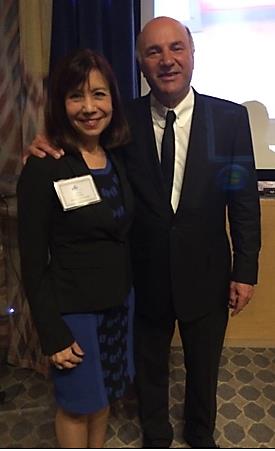 Last month I had the good fortune to hear Kevin O’Leary of Shark Tank speak at a networking event. Unlike typical celebrity events, this venue was intimate, allowing contact with Mr O’Leary and even a photo opp.
After drinks and hors d’oeuvres, we gathered into a small theater-like room to hear him speak. His speaking approach surprised me and I found it refreshing. Instead of the usual PowerPoint, or main stage podium presentation, Mr O’Leary entered the room in an unassuming manner yet strongly communicated
Last month I had the good fortune to hear Kevin O’Leary of Shark Tank speak at a networking event. Unlike typical celebrity events, this venue was intimate, allowing contact with Mr O’Leary and even a photo opp.
After drinks and hors d’oeuvres, we gathered into a small theater-like room to hear him speak. His speaking approach surprised me and I found it refreshing. Instead of the usual PowerPoint, or main stage podium presentation, Mr O’Leary entered the room in an unassuming manner yet strongly communicated 
 Could a top presenter bomb in the virtual world?
Your keynotes get rave reviews. Your training seminars are highly rated. Your reputation as a
Could a top presenter bomb in the virtual world?
Your keynotes get rave reviews. Your training seminars are highly rated. Your reputation as a  There are no boring topics-only boring speakers. Just about every audience and coaching client has heard me make that statement about
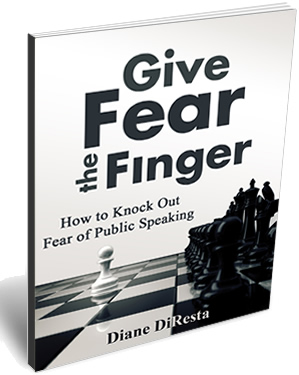 DiResta Communications Recognizes International Women’s Day with Re-Launch of “Give Fear the Finger”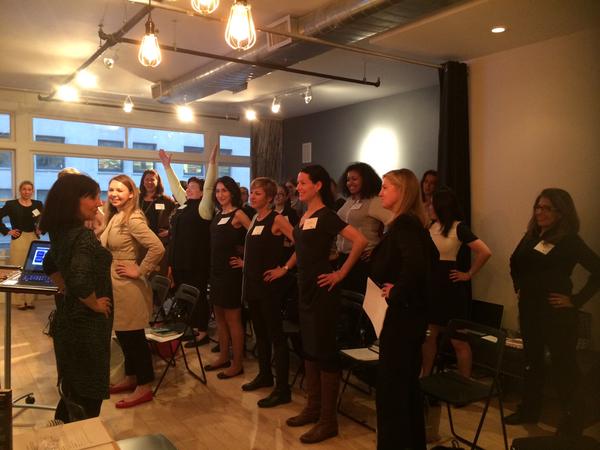
 My colleague
  In a Republican debate, Senator Marco Rubio had emerged as a great orator and touted his third place standing as a win. There was a lot of buzz about Rubio and he was riding high despite being number three. So it was no surprise that he walked into the next debate
  Speaking is a leadership skill
 It's a
 Love Story was a popular move in 1970. It starred Ryan O'Neill and Ali McGraw. In one scene they have a fight and go their separate ways. O'Neill finds McGraw after he cools off and apologizes for the fight. She stops him and says through her tears, "Love means never having to say you're sorry." I don't know if most people in conflict would agree with that.
What people may agree with is the overuse of the word "Sorry" in the workplace. This is especially prevalent among women. When I speak to organizations about
Love Story was a popular move in 1970. It starred Ryan O'Neill and Ali McGraw. In one scene they have a fight and go their separate ways. O'Neill finds McGraw after he cools off and apologizes for the fight. She stops him and says through her tears, "Love means never having to say you're sorry." I don't know if most people in conflict would agree with that.
What people may agree with is the overuse of the word "Sorry" in the workplace. This is especially prevalent among women. When I speak to organizations about  What's the one word that's the kiss of death for most presentations? No, it's not BORING. Boring is the outcome.
What makes a presentation boring?
What's the one word that's the kiss of death for most presentations? No, it's not BORING. Boring is the outcome.
What makes a presentation boring?