
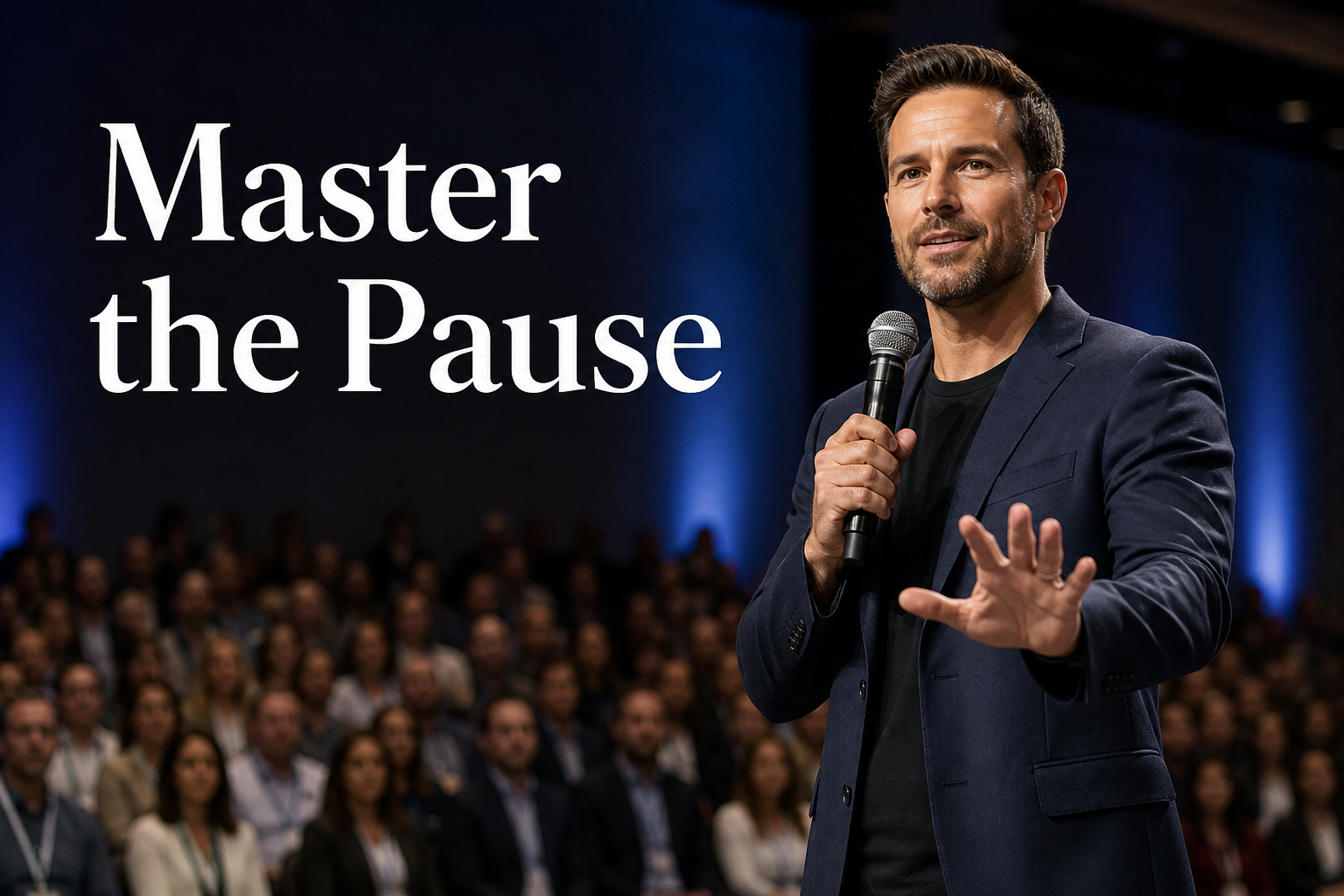
An entrepreneur I know is very capable and I respect her ideas. The challenge is that as long as I maintain eye contact she keeps talking. She never comes to a stop, leaving me no alternative but to interrupt if I want to be heard. This scenario isn’t unusual. Most people would rather speak than listen. And this tendency can sabotage leaders and rob them of presence. Whether speaking one-to-one, leading a meeting, or presenting on a stage the secret to speaking mastery is to use strategic pauses.
Why use strategic pauses?
To convey confidence
To improve comprehension
To eliminate verbal clutter
To increase impact.
When do you use strategic pauses?
Before you Begin your Speech. Presenters often speak right away instead of holding the space. Walk out, scan the audience, and then say your opening line. It may feel like an eternity but it isn’t. It puts you in control and primes the audience to listen.
After a Major Point or Theme. When you pause for a few seconds after a point it allows the message to land. If challenged with a difficult question, don’t answer immediately. Take a moment to pause and reflect. This demonstrates thoughtfulness.
Before a Major Message. This creates anticipaton.
When Introducing a Q&A Session. Ask “What questions do you have?” And then pause for 5-7 seconds. People need time to process. Some people don’t want to ask the first question and will wait for someone else to make the first move. So give them time.
To Reduce Non-words. One way to eliminate /um/ is to pause.
When Transitioning to a New Point. “Now that we’ve discussed marketing. (Pause,) le’t talk about the numbers." This strategic pause allows the audience to follow your structure and signals that you are changing direction.
After Telling a Story. For the audience to feel an emotion they need time for it to get in. The pause creates the space to experience emotion. Otherwise, the message will lose impact.
When you Lose your Place.. Don’t panic if you forget where you are. Simply pause. I once saw a friend speak. I knew she forgot a word by her pausing but nobody else did. It seemed like a natural pause and it allowed her to remember the next line.
To Add Emphasis. A strategic pause after a word or phrase acts like a verbal highlighter. It tells the audience that this is important.
Before Your Ending Line. People remember the last thing you say. Highlight it with a strategic pause to make it memorable.
Final Thought
Don’t fear silence. Embrace it. Confident leaders don’t fill the space. They command it. Use strategic pauses to elevate your presence, sharpen your message and connect with the audience.
Connect with me on LinkedIn
Subscribe to my youtube channel
To work with me visit diresta.com

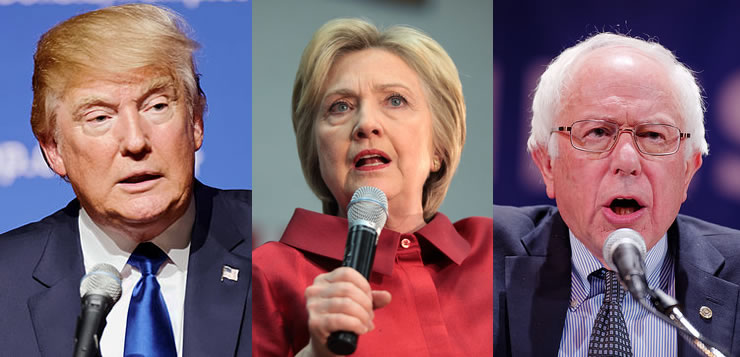 This U.S. presidential election was like no other. Hillary Clinton and Donald Trump went head-to-head in a
 Love Story was a popular move in 1970. It starred Ryan O'Neill and Ali McGraw. In one scene they have a fight and go their separate ways. O'Neill finds McGraw after he cools off and apologizes for the fight. She stops him and says through her tears, "Love means never having to say you're sorry." I don't know if most people in conflict would agree with that.
What people may agree with is the overuse of the word "Sorry" in the workplace. This is especially prevalent among women. When I speak to organizations about
Love Story was a popular move in 1970. It starred Ryan O'Neill and Ali McGraw. In one scene they have a fight and go their separate ways. O'Neill finds McGraw after he cools off and apologizes for the fight. She stops him and says through her tears, "Love means never having to say you're sorry." I don't know if most people in conflict would agree with that.
What people may agree with is the overuse of the word "Sorry" in the workplace. This is especially prevalent among women. When I speak to organizations about  Executive Presence