
 This U.S. presidential election was like no other. Hillary Clinton and Donald Trump went head-to-head in a heated debate with more twists and turns than a roller coaster ride. The ongoing soap opera kept people riveted to their screens -- sometimes inspired and other times disgusted. Regardless of the outcome, there were lessons learned about public speaking.
Here some presidential guidelines to deliver winning presentations:
Deliver a Message that Resonates -- To be effective in any presentation, a public speaker must have a message that resonates with the audience. While sizzle is important, if the message doesn’t speak directly to the self interests of the audience, it won’t be remembered and it won’t move the crowd.
Both Sanders and Trump leveraged the emotions of the audience and spoke directly and specifically to their frustrations, problems, and concerns. To resonate with an audience the presenter needs to speak simply, use shorter words, and to tell stories that relate to what the audience believes and experiences. When the presenter speaks their language, the audience feels heard, understood, and connected. And that builds trust.
Smile and Deflect -- At some point every public speaker will encounter resistance or hostility. The worst approach is to get defensive. When you play your opponent’s game, you lose. The debates got nasty at times. When Trump attacked Hillary, she reacted by smiling until it was her turn to rebut. Hillary showed poise under pressure. In situations other than a debate, the presenter can involve the audience to deflect hostility. There’s nothing more powerful than peer pressure.
Do the Unexpected -- Attention spans are growing shorter. There’s now research that states that the attention of a goldfish is one second longer than that of a human. Yikes! To keep an audience engaged and attentive, be different.
Trump broke the rules. He was unpredictable and said things that were politically incorrect. The audience found it refreshing because he said what they were thinking. When presenters avoid naming the elephant in the room, the audience retreats and resists. It’s difficult to be influential if you tiptoe around the truth. (Yes, he went too far, and lost credibility for being inappropriate to say the least). When used appropriately, the element of surprise will keep the audience with you.
Get Personal -- All three candidates showed a personal side of themselves by involving their family and sharing stories. Every audience is thinking three things subliminally -- Who are you? Who are you to tell me? What’s in it for me?
An audience first wants to know the presenter as a person, not as a talking head. Sharing personal stories and talking about one’s family humanizes the speaker. Substance without personal connection will not yield results. An audience relates to people they know, like, and trust. Never underestimate the likability factor.
Be Gracious Victory and Defeat -- Sometimes you win, sometimes you lose. It’s true in politics, sports, and at work. A gloating winner or a sore loser will cast themselves in a negative light. What separates the ordinary from the great is how a presenter handles victory and defeat. When Donald won the election, he complimented Hillary on her toughness, hard work, and service. Bernie and Hillary were gracious when they conceded the election. Hillary’s concession speech inspired the country to unite and paved the way for a new administration. This is truly the mark of leadership.
Most of us will never run for office but we can take a page out of the election playbook and remember to apply the good, and eliminate the bad and the ugly.

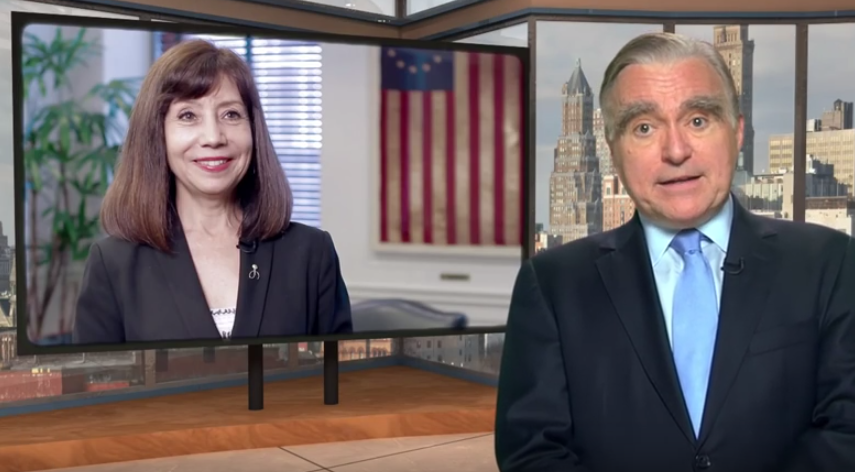 What do today's business presenters have in common with television anchors? They both have broadcasting skills. With

 What do you do when a loved one dies and you're the person to give the eulogy? Last weekend I attended the memorial service of my friend, Linda who lost her battle to lung cancer at the age of 63.
Memorial services are usually bittersweet. The service was beautifully inspiring and sad at the same time. The tributes from her sorority sisters gave an insight into her personality and the reader of her legacy left a powerful impression of Linda's contribution of the world. The soloist sang Linda's favorite song with feeling and his voice filled up the room with love.
What do you do when a loved one dies and you're the person to give the eulogy? Last weekend I attended the memorial service of my friend, Linda who lost her battle to lung cancer at the age of 63.
Memorial services are usually bittersweet. The service was beautifully inspiring and sad at the same time. The tributes from her sorority sisters gave an insight into her personality and the reader of her legacy left a powerful impression of Linda's contribution of the world. The soloist sang Linda's favorite song with feeling and his voice filled up the room with love.
 It's the Dog Days of August and public speaking is going to the dogs - in a good way. Animals, especially dogs, have been used in pet therapy programs for years. Research shows that pets can help lower blood pressure, and reduce anxiety. Bonnie Auslander, who specializes in
 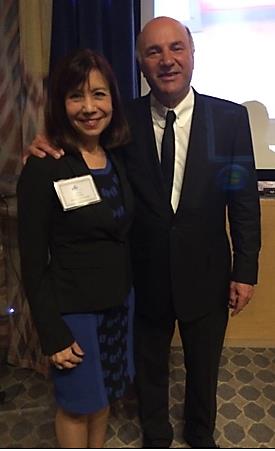 Last month I had the good fortune to hear Kevin O’Leary of Shark Tank speak at a networking event. Unlike typical celebrity events, this venue was intimate, allowing contact with Mr O’Leary and even a photo opp.
After drinks and hors d’oeuvres, we gathered into a small theater-like room to hear him speak. His speaking approach surprised me and I found it refreshing. Instead of the usual PowerPoint, or main stage podium presentation, Mr O’Leary entered the room in an unassuming manner yet strongly communicated
Last month I had the good fortune to hear Kevin O’Leary of Shark Tank speak at a networking event. Unlike typical celebrity events, this venue was intimate, allowing contact with Mr O’Leary and even a photo opp.
After drinks and hors d’oeuvres, we gathered into a small theater-like room to hear him speak. His speaking approach surprised me and I found it refreshing. Instead of the usual PowerPoint, or main stage podium presentation, Mr O’Leary entered the room in an unassuming manner yet strongly communicated 
 Could a top presenter bomb in the virtual world?
Your keynotes get rave reviews. Your training seminars are highly rated. Your reputation as a
Could a top presenter bomb in the virtual world?
Your keynotes get rave reviews. Your training seminars are highly rated. Your reputation as a  There are no boring topics-only boring speakers. Just about every audience and coaching client has heard me make that statement about
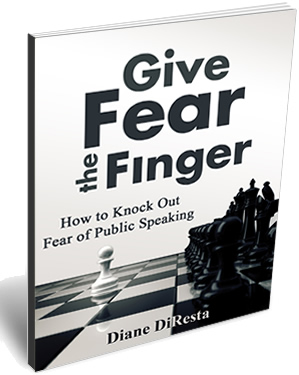 DiResta Communications Recognizes International Women’s Day with Re-Launch of “Give Fear the Finger”
 My colleague
  In a Republican debate, Senator Marco Rubio had emerged as a great orator and touted his third place standing as a win. There was a lot of buzz about Rubio and he was riding high despite being number three. So it was no surprise that he walked into the next debate
  Speaking is a leadership skill
 It's a
  What's the one word that's the kiss of death for most presentations? No, it's not BORING. Boring is the outcome.
What makes a presentation boring?
What's the one word that's the kiss of death for most presentations? No, it's not BORING. Boring is the outcome.
What makes a presentation boring?