
 I went to the supermarket to pick up a few items. Not wanting to wait in line, I found a cashier who was without customers. She had her back turned as she was shuffling a deck of coupons. I approached her and stood there expecting her to stop what she was doing to serve me. She did not. She continued to organize the coupons and never said a word to me or attempted to make eye contact. She placed a rubber band around the coupons, put them in the drawer and without saying a word, started to ring up the two items.
It was like I wasn't there.
Viewing this as an experiment in communication, I said nothing. Neither did she. After ringing up the groceries she spoke for the first time. "$6.07, " she said. As I was digging for change she turned and talked to the other cashiers. I paid the bill and left. Talk about feeling invisible.
Yes, she was a young person being paid minimum wage but that's not an excuse for being rude. (Although I doubt that was her perception). I've had friendlier and more helpful service from others in her position. It made me think about what was being communicated by this cashier. By not acknowledging that I was standing in front of her I felt ignored and not valued as a customer. She had no idea of the impact of her silence and lack of friendliness. By not greeting a customer and avoiding eye contact, she tarnished the brand of the store. There was little difference between doing business with her and scanning my own groceries in the self service line. I left with a negative feeling about the supermarket although I've shopped there many times.
My husband reminded me that he doesn't like going to our local Thai restaurant even though the food is good and inexpensive. He dislikes the waitress who doesn't smile and looks annoyed all the time. He calls her "a pill". Think about it. He doesn't want to eat where the food is good because he doesn't like her attitude. She non-verbally communicates that the customers are an annoyance to her. She's creating a negative feeling.
How often do we minimize soft skills in the business world? Something as seemingly basic as greeting a person or making eye contact can have a big impact. It's part of your presentation. In graduate school, I waited tables at a New York City fast food restaurant in the middle of Times Square. (That's another story). I quickly learned the ROI of interpersonal skills. A greeting, friendly tone, and a smile could yield a better tip.
There's a barista at my local Starbucks named Gus. He remembers everyone's name. When I walk in the store, he starts making my green tea because he knows my order. Gus makes customers feel special and I always ask for him.
So the point is this. We are always presenting ourselves and the organization we represent. McDonald's understands this. Every entry level worker greets each customer by looking at them and saying "Welcome to McDonalds". They are well trained because the company recognizes that communication impacts their brand. It's the intangibles that drive the tangible. The next time you have a meeting or presentation, be fully present, acknowledge the other person and whatever your topic, serve it up with a smile.
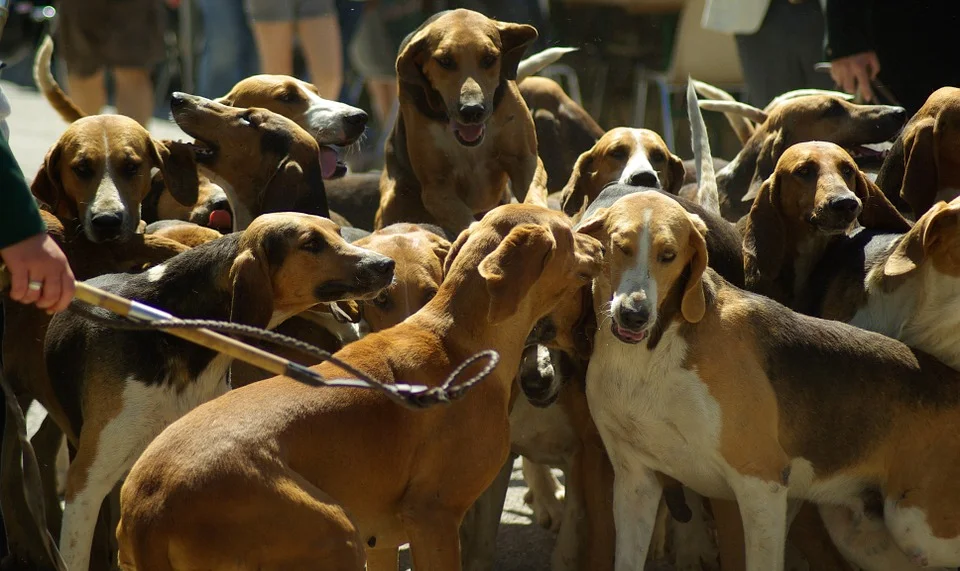
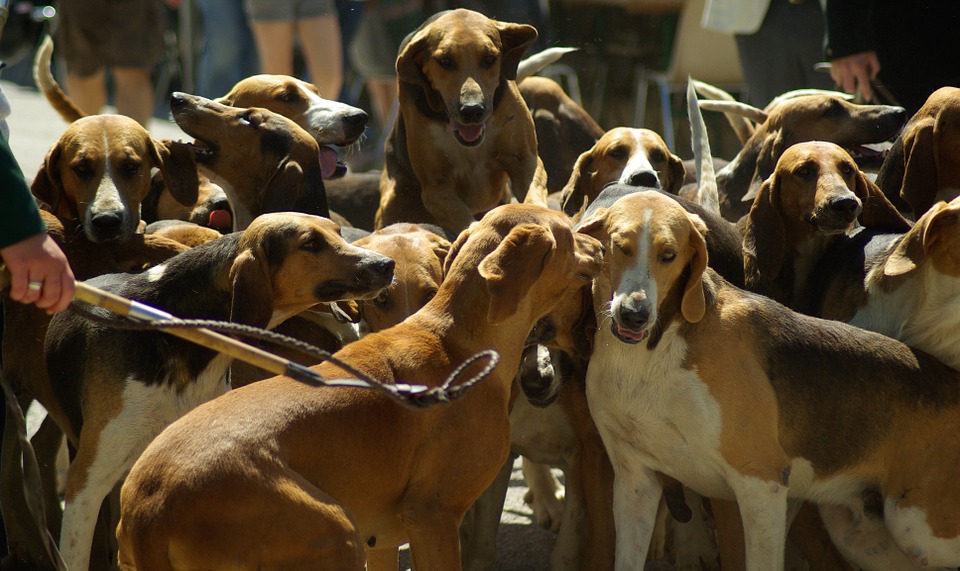 It's the Dog Days of August and public speaking is going to the dogs - in a good way. Animals, especially dogs, have been used in pet therapy programs for years. Research shows that pets can help lower blood pressure, and reduce anxiety. Bonnie Auslander, who specializes in


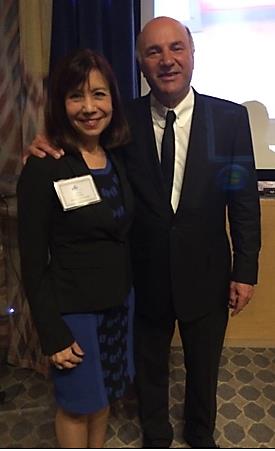 Last month I had the good fortune to hear Kevin O’Leary of Shark Tank speak at a networking event. Unlike typical celebrity events, this venue was intimate, allowing contact with Mr O’Leary and even a photo opp.
After drinks and hors d’oeuvres, we gathered into a small theater-like room to hear him speak. His speaking approach surprised me and I found it refreshing. Instead of the usual PowerPoint, or main stage podium presentation, Mr O’Leary entered the room in an unassuming manner yet strongly communicated
Last month I had the good fortune to hear Kevin O’Leary of Shark Tank speak at a networking event. Unlike typical celebrity events, this venue was intimate, allowing contact with Mr O’Leary and even a photo opp.
After drinks and hors d’oeuvres, we gathered into a small theater-like room to hear him speak. His speaking approach surprised me and I found it refreshing. Instead of the usual PowerPoint, or main stage podium presentation, Mr O’Leary entered the room in an unassuming manner yet strongly communicated 
 Could a top presenter bomb in the virtual world?
Your keynotes get rave reviews. Your training seminars are highly rated. Your reputation as a
Could a top presenter bomb in the virtual world?
Your keynotes get rave reviews. Your training seminars are highly rated. Your reputation as a  There are no boring topics-only boring speakers. Just about every audience and coaching client has heard me make that statement about
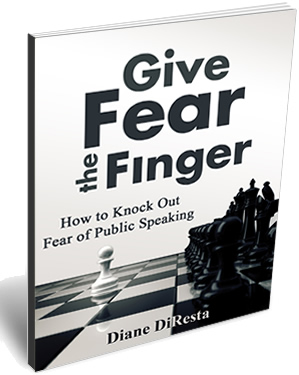 DiResta Communications Recognizes International Women’s Day with Re-Launch of “Give Fear the Finger”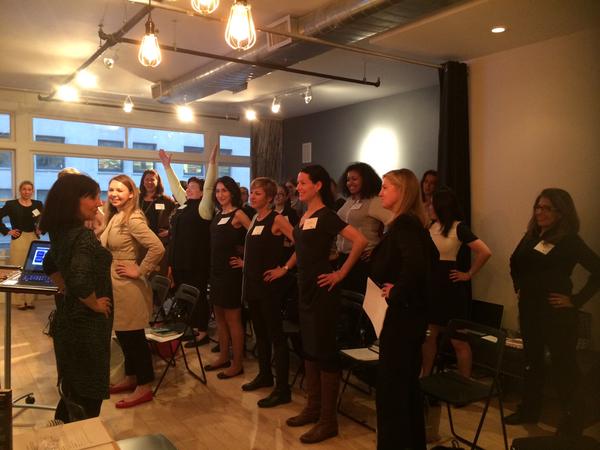
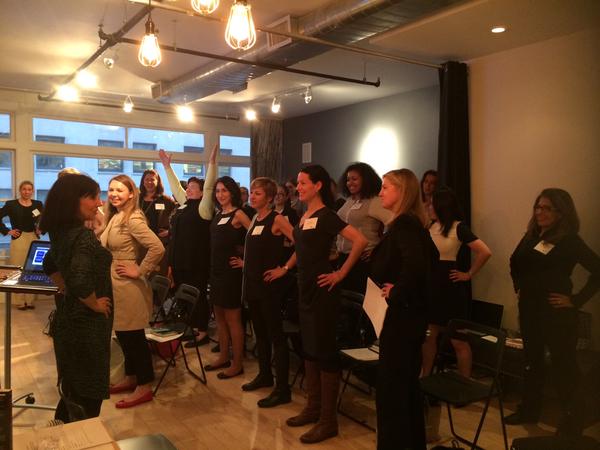 My colleague
  In a Republican debate, Senator Marco Rubio had emerged as a great orator and touted his third place standing as a win. There was a lot of buzz about Rubio and he was riding high despite being number three. So it was no surprise that he walked into the next debate
  Speaking is a leadership skill
 It's a
 Love Story was a popular move in 1970. It starred Ryan O'Neill and Ali McGraw. In one scene they have a fight and go their separate ways. O'Neill finds McGraw after he cools off and apologizes for the fight. She stops him and says through her tears, "Love means never having to say you're sorry." I don't know if most people in conflict would agree with that.
What people may agree with is the overuse of the word "Sorry" in the workplace. This is especially prevalent among women. When I speak to organizations about
Love Story was a popular move in 1970. It starred Ryan O'Neill and Ali McGraw. In one scene they have a fight and go their separate ways. O'Neill finds McGraw after he cools off and apologizes for the fight. She stops him and says through her tears, "Love means never having to say you're sorry." I don't know if most people in conflict would agree with that.
What people may agree with is the overuse of the word "Sorry" in the workplace. This is especially prevalent among women. When I speak to organizations about  What's the one word that's the kiss of death for most presentations? No, it's not BORING. Boring is the outcome.
What makes a presentation boring?
What's the one word that's the kiss of death for most presentations? No, it's not BORING. Boring is the outcome.
What makes a presentation boring? How is