
 TED talks are going viral and they're raising the bar on public speaking. TED stands for technology, entertainment and design. These videos feature some of the best public speakers who are spreading the most compelling content and ideas. It's tough to be selected as a TED speaker. So on a community level, presenters are forming local events called TEDx.
Jeremy Donovan, the speaking sherpa, organized his own local TEDx event and shared his experience and secrets to being a TEDx presenter. Anybody can organize a local event. The caveat is that an organizer cannot be a speaker for the same event.
TED talks are going viral and they're raising the bar on public speaking. TED stands for technology, entertainment and design. These videos feature some of the best public speakers who are spreading the most compelling content and ideas. It's tough to be selected as a TED speaker. So on a community level, presenters are forming local events called TEDx.
Jeremy Donovan, the speaking sherpa, organized his own local TEDx event and shared his experience and secrets to being a TEDx presenter. Anybody can organize a local event. The caveat is that an organizer cannot be a speaker for the same event.
Donovan, who's been a TEDx organizer and speaker told the audience that speaking at TED is all about the story. Not every TEDx presenter is a top speaker but the one thing they all have in common is an inspiring story. He shared his formula for creating stories. Citing the movie Star Wars, Donovan deconstructed the hero's journey as a typical structure for inspirational stories. The two most important elements that are consistent in the highest rated TED presentations are storytelling and humor. He advised using humor within the first two minutes of your presentation.
While all TED talks are timed for 18 minutes, a TEDx talk can be 3 minutes, 5 minutes, or 18 minutes. Donovan gave one speaker a 5 minute slot because he wanted the audience to hear his story while protecting him from a lack of platform experience.
A big mistake first time motivational speakers make is to extol their own virtues. He warned that the audience must be able to relate and that being humble goes a long way.
How do you get selected for a TEDx talk? As in life, networking is the best way to make contact with an organizer. The interview process may require a video of your presentation as well as a marketing platform. When Donovan was an organizer, he expected presenters to have at least 500 linkedin contacts. As in publishing, the TEDx organizer needs help in promoting the event.
Can anybody be a TEDx speaker? Probably not-unless they have an inspirational idea worth spreading.
 The first presidential debate on October 3, 2012 belongs to Mitt Romney. It was a clear win in terms of content and delivery. Both candidates began cordially and gracefully. The President acknowledged his wife on the evening of their 20th anniversary. Mitt Romney also congratulated him and quipped about how Obama probably didn't want to spend a romantic evening on stage with him.
Both candidates are skilled public speakers. They each looked presidential but Romney owned the room with his rapid fire responses, his knowledge of the facts, and his aggressive approach. He seemed more relaxed and natural and was finally able to humanize his image by talking about people he had met on the campaign trail and correcting any inaccuracies about his policies. What was especially effective was his ability to speak crisply as he quickly enumerated three to four points he wanted to make. He made direct eye contact with Obama and his passion was evident. Gone was his robotic delivery.
The first presidential debate on October 3, 2012 belongs to Mitt Romney. It was a clear win in terms of content and delivery. Both candidates began cordially and gracefully. The President acknowledged his wife on the evening of their 20th anniversary. Mitt Romney also congratulated him and quipped about how Obama probably didn't want to spend a romantic evening on stage with him.
Both candidates are skilled public speakers. They each looked presidential but Romney owned the room with his rapid fire responses, his knowledge of the facts, and his aggressive approach. He seemed more relaxed and natural and was finally able to humanize his image by talking about people he had met on the campaign trail and correcting any inaccuracies about his policies. What was especially effective was his ability to speak crisply as he quickly enumerated three to four points he wanted to make. He made direct eye contact with Obama and his passion was evident. Gone was his robotic delivery.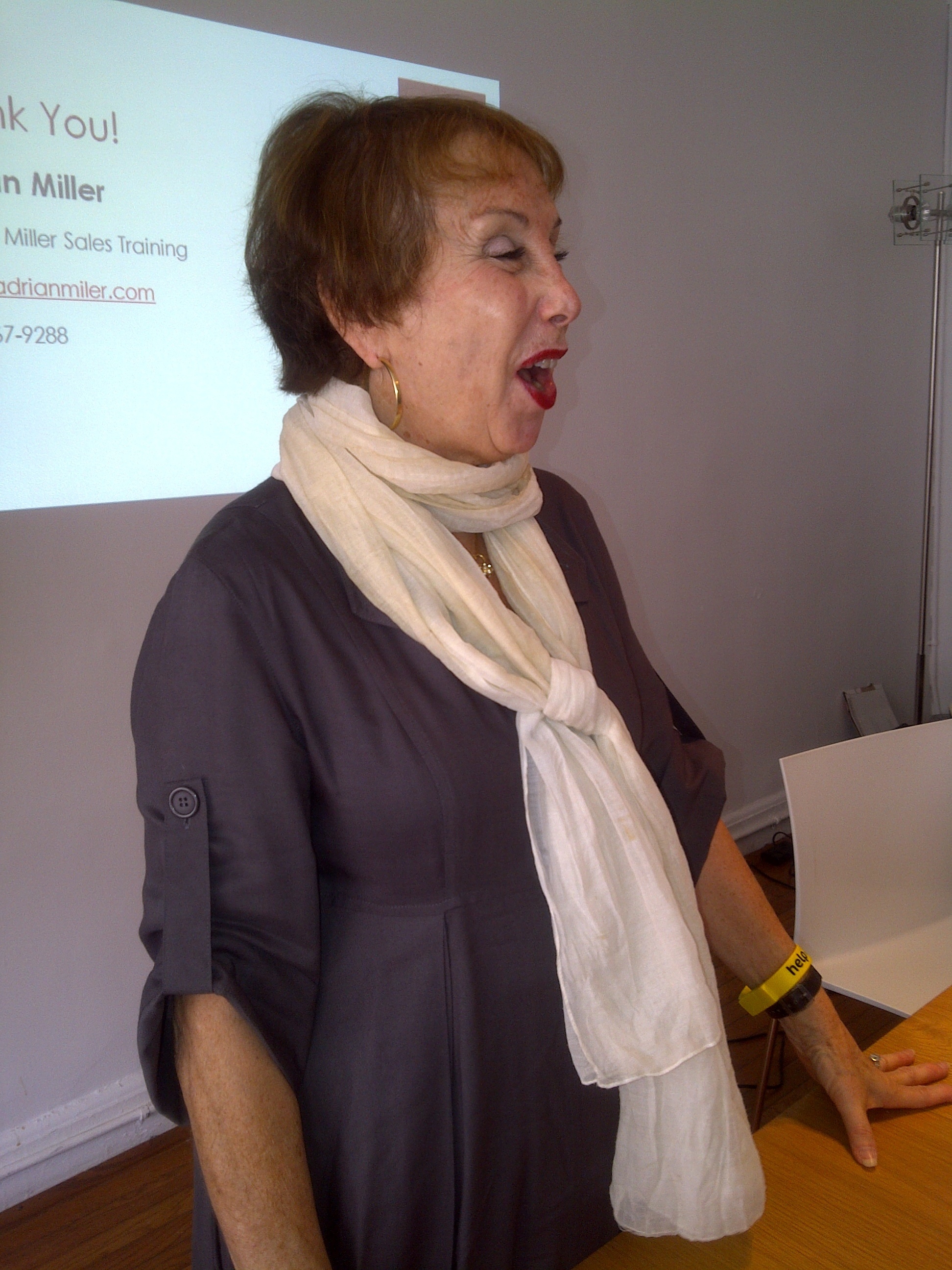
 On Friday, Ford Saeks spoke to the
  The political stage is a fascinating study of the power of the presentation. When it comes to public speaking and
 Last night I was a guest speaker for ABWA. My presentation was Speak Powerfully Sell More: Speak Your Way to More Business.
One woman in the audience asked a question about how to handle a celebrity who is hired to speak and doesn't deliver. This woman went on a rant about how many of these celebrities are not good speakers and yet meeting planners continue to hire them. I explained that the reason for that was event planners want to sell tickets. An event will sell out when the keynote speaker is a celebrity.
Last night I was a guest speaker for ABWA. My presentation was Speak Powerfully Sell More: Speak Your Way to More Business.
One woman in the audience asked a question about how to handle a celebrity who is hired to speak and doesn't deliver. This woman went on a rant about how many of these celebrities are not good speakers and yet meeting planners continue to hire them. I explained that the reason for that was event planners want to sell tickets. An event will sell out when the keynote speaker is a celebrity. Today marks the eleven year anniversary of 911. I remember it like yesterday. It was the nicest day of the year. There was a noticeable stillness in the air. I headed off to
  Bill Clinton is a rock star on the speaking platform and the ultimate spin meister. I tell my audiences that gifted speakers are born. Most public speakers will never reach the level of a Martin Luther King. Not even most professional speakers achieve that height. Some speakers have a special gift-an ability to move the masses, entertain the crowd, speak off the cuff, and sway an audience.
And last night at the Democratic Convention, Clinton demonstrated all of it and then some. As I anticipated his speech, I wondered how he was going to excite the crowds when the facts pointed to high unemployment, lower wages, and a general discontent with the economy. Well, it didn't take him long to put a position spin on the situation. How did he do it?
Bill Clinton is a rock star on the speaking platform and the ultimate spin meister. I tell my audiences that gifted speakers are born. Most public speakers will never reach the level of a Martin Luther King. Not even most professional speakers achieve that height. Some speakers have a special gift-an ability to move the masses, entertain the crowd, speak off the cuff, and sway an audience.
And last night at the Democratic Convention, Clinton demonstrated all of it and then some. As I anticipated his speech, I wondered how he was going to excite the crowds when the facts pointed to high unemployment, lower wages, and a general discontent with the economy. Well, it didn't take him long to put a position spin on the situation. How did he do it?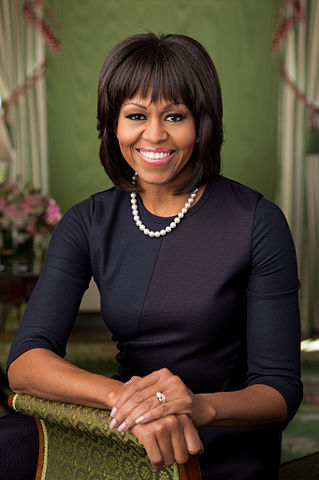
 Today is Take a Second Look Day. That means it's a day to repurpose, reuse, or redistribute your content. It can apply to anything in your life. Since many public speakers freeze when they have to prepare a speech or presentation, I thought it would be valuable to apply this "Take a Second Look" concept to preparing a presentation.
Panel Presentations
Let's say you're asked to speak on a panel or to give a stand-up presentation on your topic of expertise. You're staring at a blank piece of paper and wondering how to begin. Who says you have to start from scratch? Use what you already have done. Take a look at past presentations, documents, proposals, blogs, and articles you're written. What is the main topic or theme? How can you repackage it?
Today is Take a Second Look Day. That means it's a day to repurpose, reuse, or redistribute your content. It can apply to anything in your life. Since many public speakers freeze when they have to prepare a speech or presentation, I thought it would be valuable to apply this "Take a Second Look" concept to preparing a presentation.
Panel Presentations
Let's say you're asked to speak on a panel or to give a stand-up presentation on your topic of expertise. You're staring at a blank piece of paper and wondering how to begin. Who says you have to start from scratch? Use what you already have done. Take a look at past presentations, documents, proposals, blogs, and articles you're written. What is the main topic or theme? How can you repackage it? Last night at the Republican convention, we witnessed public speakers who nailed their presentations. What do Paul Ryan, Condolezza Rice, and Susana Martinez have in common as public speakers? Each and everyone of them shared a personal story.
Susana began by telling the story of her immigrant parents.
Last night at the Republican convention, we witnessed public speakers who nailed their presentations. What do Paul Ryan, Condolezza Rice, and Susana Martinez have in common as public speakers? Each and everyone of them shared a personal story.
Susana began by telling the story of her immigrant parents. A couple of years ago I spoke to an organization of business owners. Their policy was that you had to give two free three hour presentations before you could have the honor of being paid to speak. It didn't matter if you had 20 years experience,
  It was Day One of my presentation skills seminar. I asked the participants to talk about their passion. The presenters spoke about a vacation, a hobby, a sport, an event. It was evident that their presentations improved when they spoke with passion.
Next up was Elliot. I asked, "What's your topic?" He replied, "Inventory control." A bit confused, I said, "No, Elliot, It should be something you feel passionate about. What excites you?" "Inventory control," he countered. I could tell that this was going to be a LONG day. Subscribing to the philosophy, if you can't beat 'em, join 'em, I acquiesced. After all, some people just have to learn the hard way. I hit the record button on the video camera, as I anticipated his painfully boring presentation.
It was Day One of my presentation skills seminar. I asked the participants to talk about their passion. The presenters spoke about a vacation, a hobby, a sport, an event. It was evident that their presentations improved when they spoke with passion.
Next up was Elliot. I asked, "What's your topic?" He replied, "Inventory control." A bit confused, I said, "No, Elliot, It should be something you feel passionate about. What excites you?" "Inventory control," he countered. I could tell that this was going to be a LONG day. Subscribing to the philosophy, if you can't beat 'em, join 'em, I acquiesced. After all, some people just have to learn the hard way. I hit the record button on the video camera, as I anticipated his painfully boring presentation.